

Magdalena Frauenberg
curated by Sofia Ohmer & Florian Waldvogel
Friday 6th March 7 pm OPENING
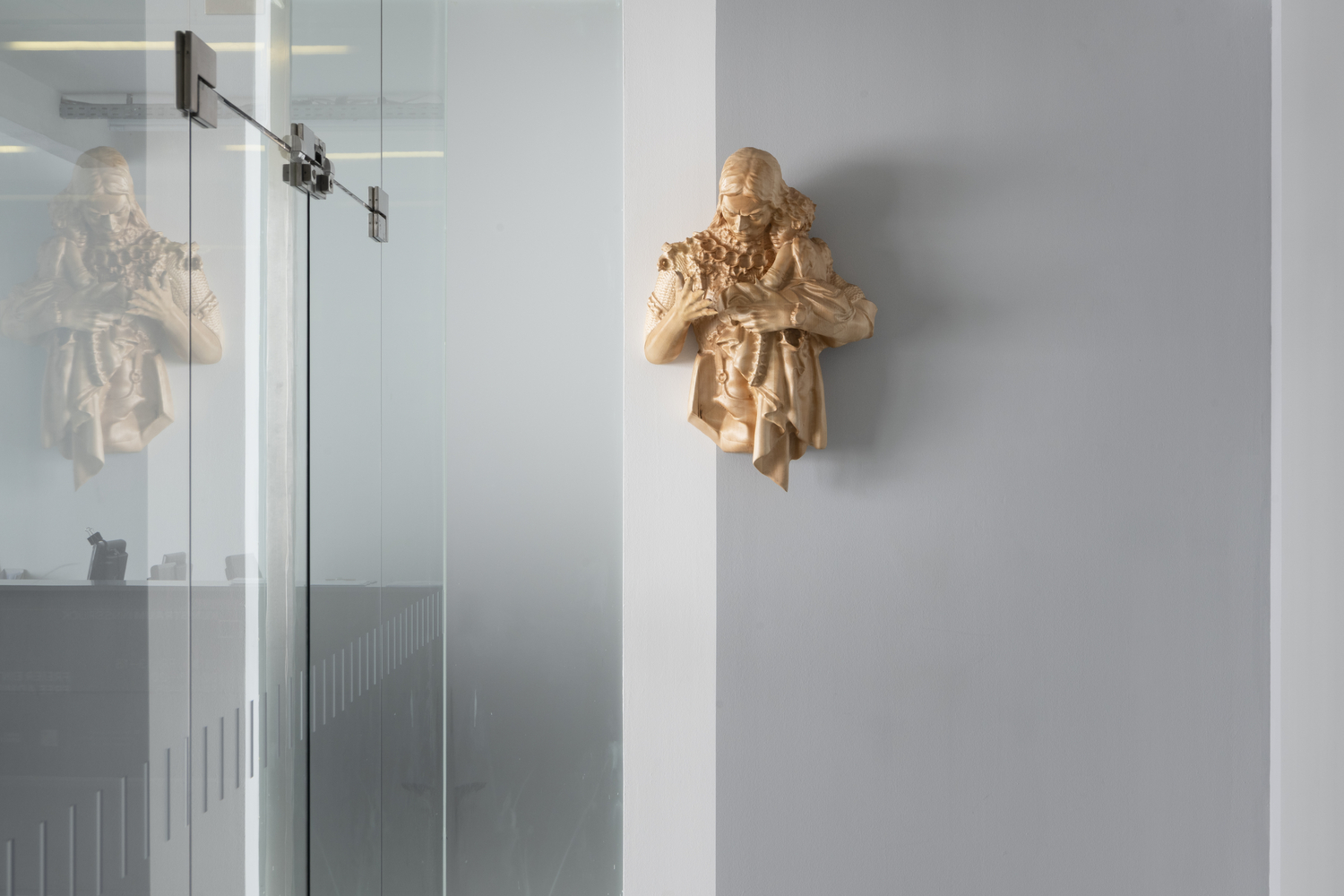
Magdalena Frauenberg (*1996, Austria) combines feminist perspectives with a post-structuralist influenced visual language in which cultural signs do not appear as fixed meanings, but as mutable, historically formed constructions. Her installations, photographs, and video works draw on regional iconographies, art-historical references, and material artifacts to question attributions of femininity. Memory, the body, and cultural signs enter into an open relationship with one another, in which visibility always remains permeated by absence. It is precisely within this tension that a pictorial space emerges that explains less than it shifts, connects, and renders newly legible.
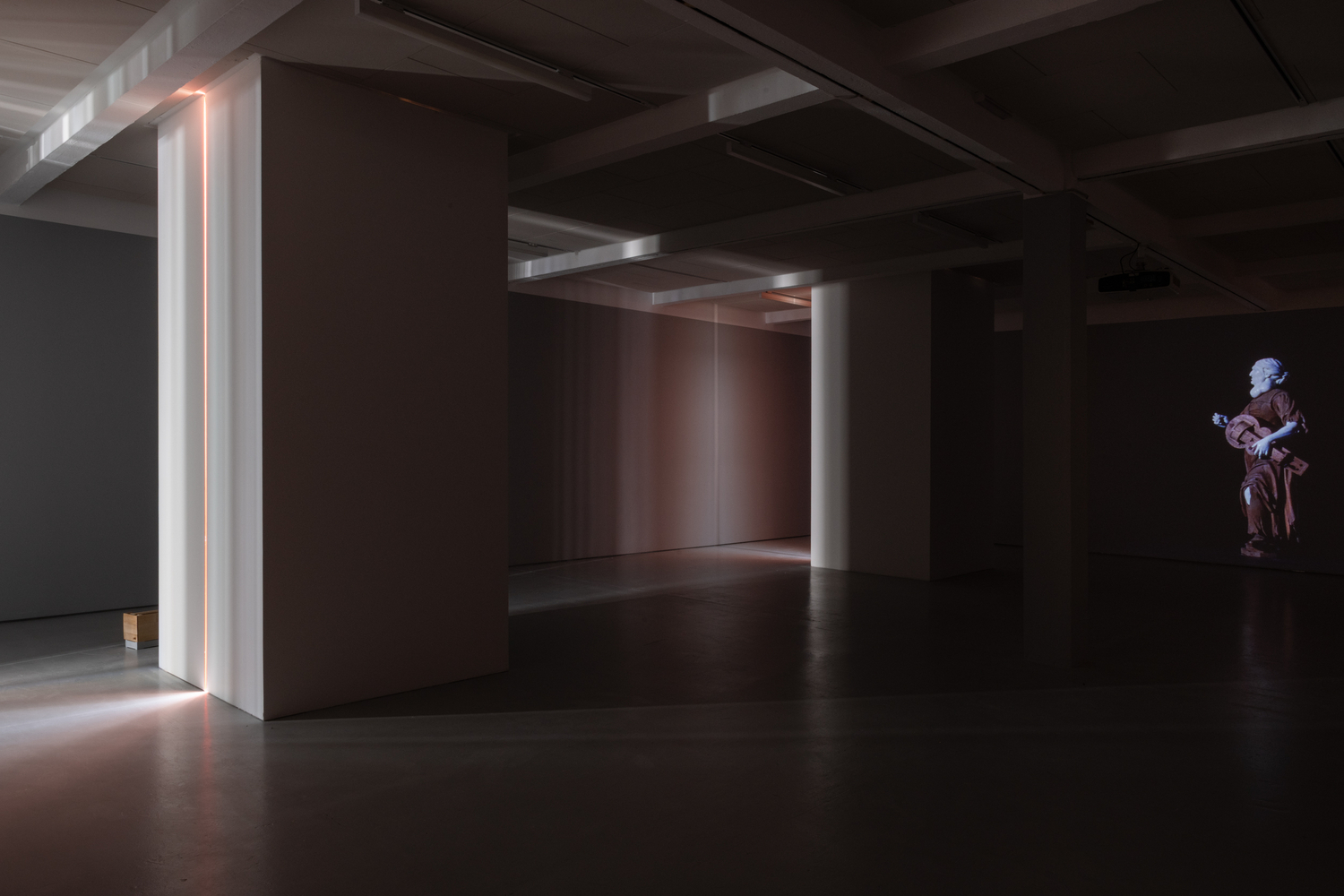
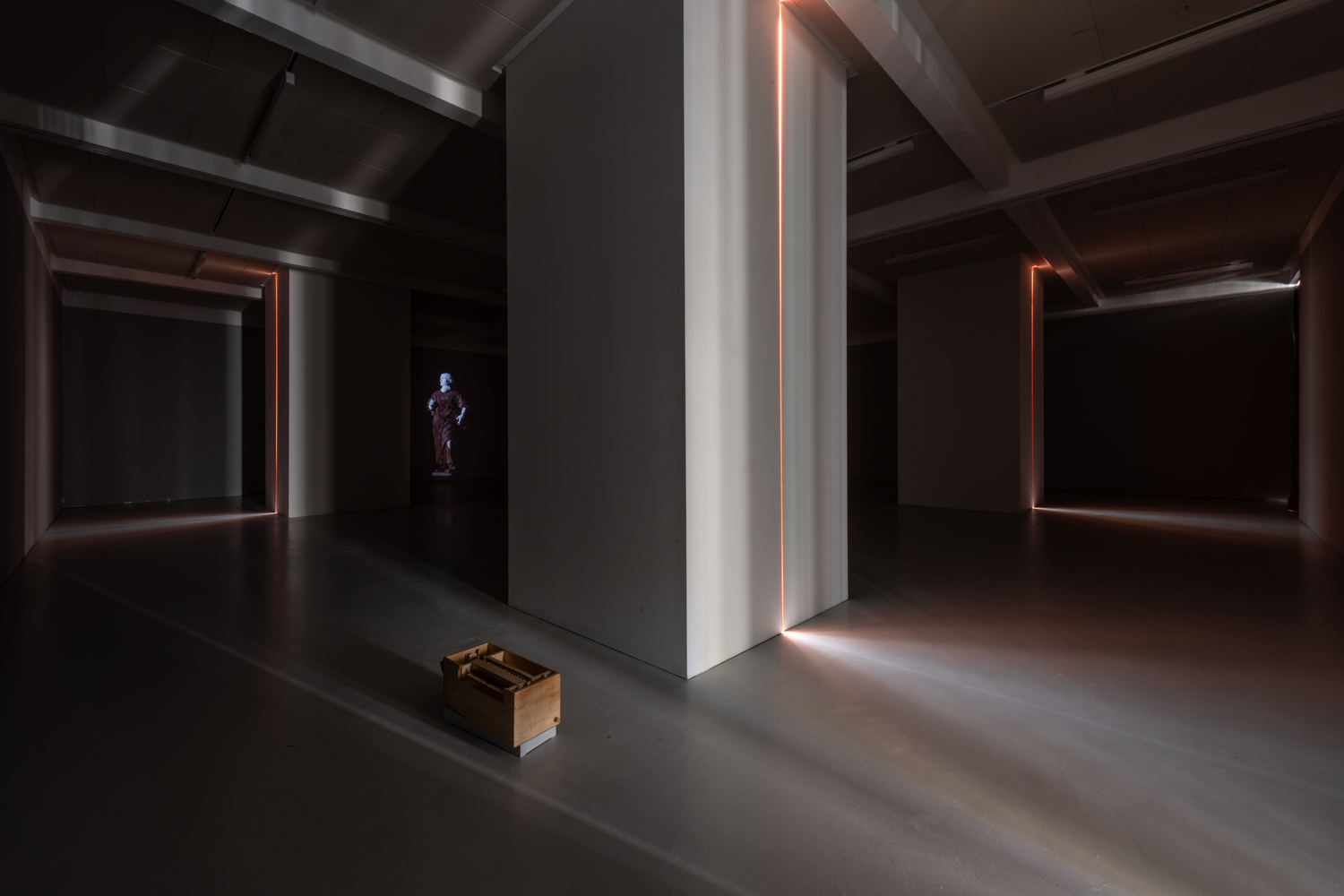
At the center of the exhibition are four light vitrines, which function less as objects in the classical sense than as spatial diapositifs. They attempt to direct the light of the outside world into the interior of the exhibition space and treat emptiness and brightness themselves as form-giving materials. Light does not appear as a neutral medium of visibility, but as a curated, guided force that structures perception and generates meaning. The vitrines create an illusion not through excess, but through deliberate reduction. What becomes visible above all is what is missing: a space defined by absence.
This strategy refers to art-historical pictorial traditions in which emptiness assumes a central symbolic function. In Fra Angelico’s depiction of the Last Judgment, for example, the opened, empty graves appear as sites of transience. Georges Didi-Huberman has pointed out that in the Christian image it is not the face of Christ that constitutes the most radical motif, but the empty tomb itself: a sign that unfolds its strongest effect precisely through the absence of the body. Emptiness becomes a placeholder between two states, an image for that which eludes visibility and yet generates meaning. In the light vitrines, this field of tension between presence and withdrawal continues. The light marks a place where something could be, without it actually materializing.
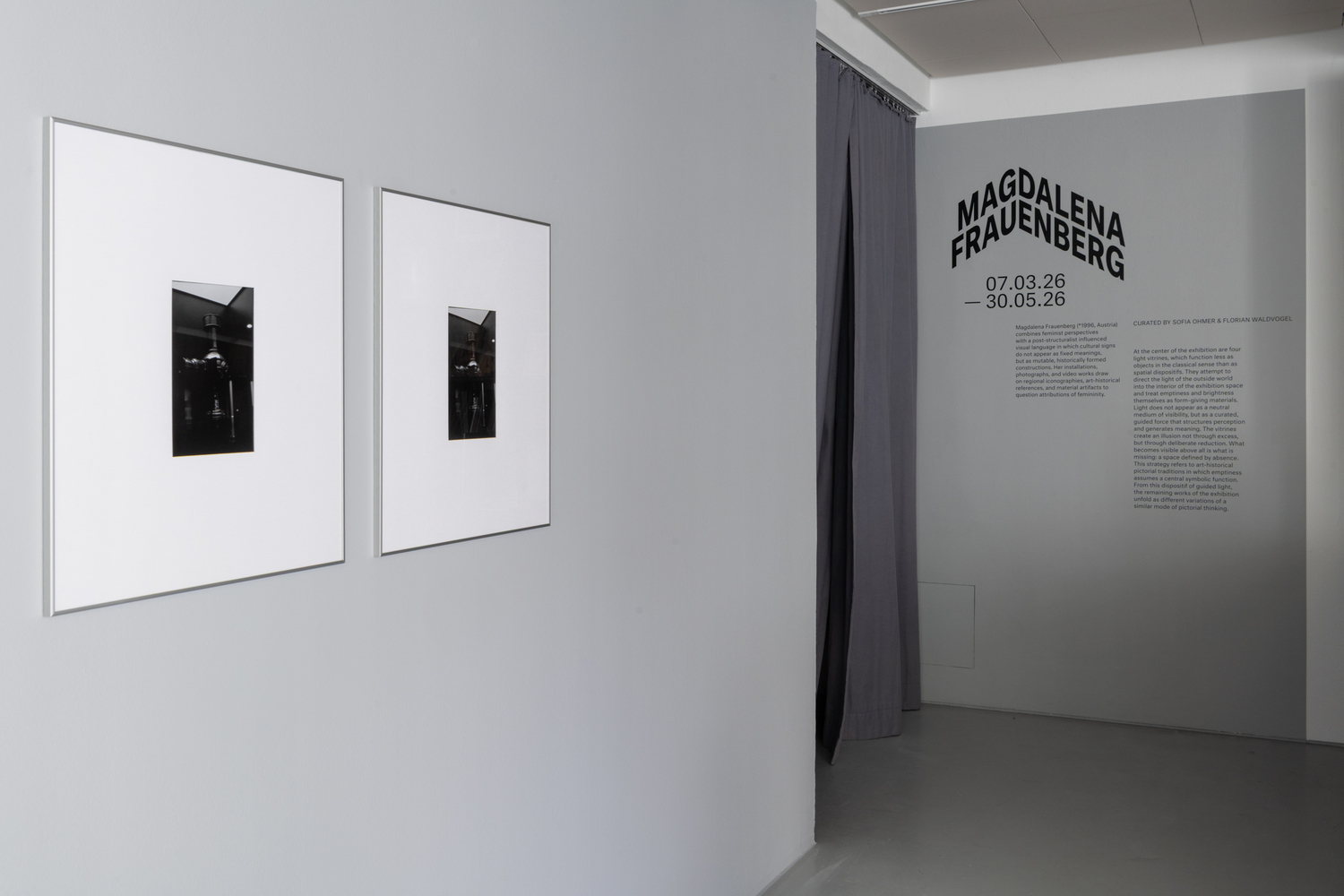
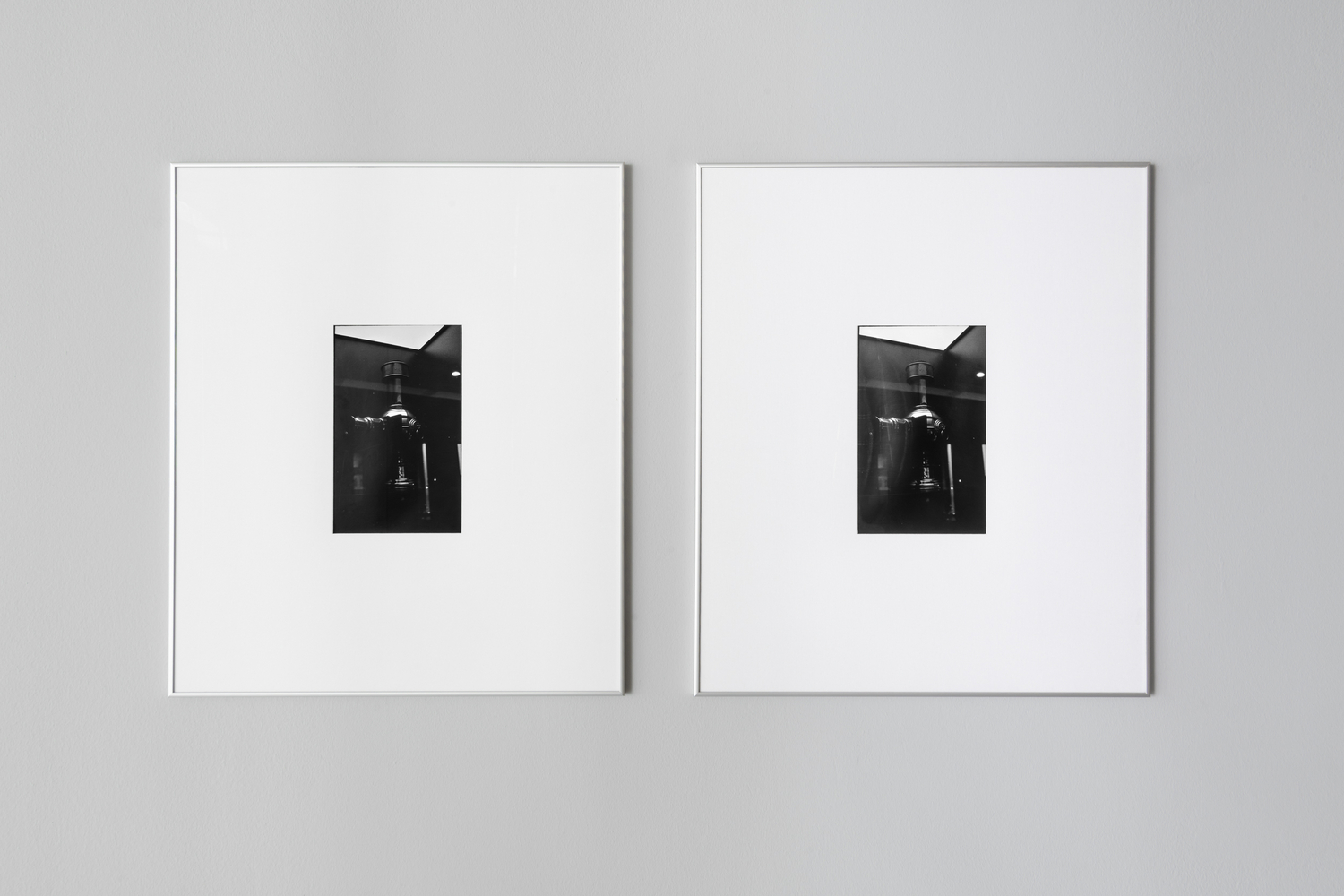
From this dispositif of guided light, the remaining works of the exhibition unfold as different variations of a similar mode of pictorial thinking. On the wall hangs an analog photograph, recorded and developed in the darkroom, of a magic lantern by the Lapierre brothers, produced between approximately 1860 and 1886. This early projection device stands at the beginning of the history of the moving image and points to an era in which light, mechanics, and illusion first merged into narrative spaces. The photograph itself, as a chemically produced light image, doubles this historical reference and simultaneously renders the apparatus a symbol of the conditions of visibility and image production.
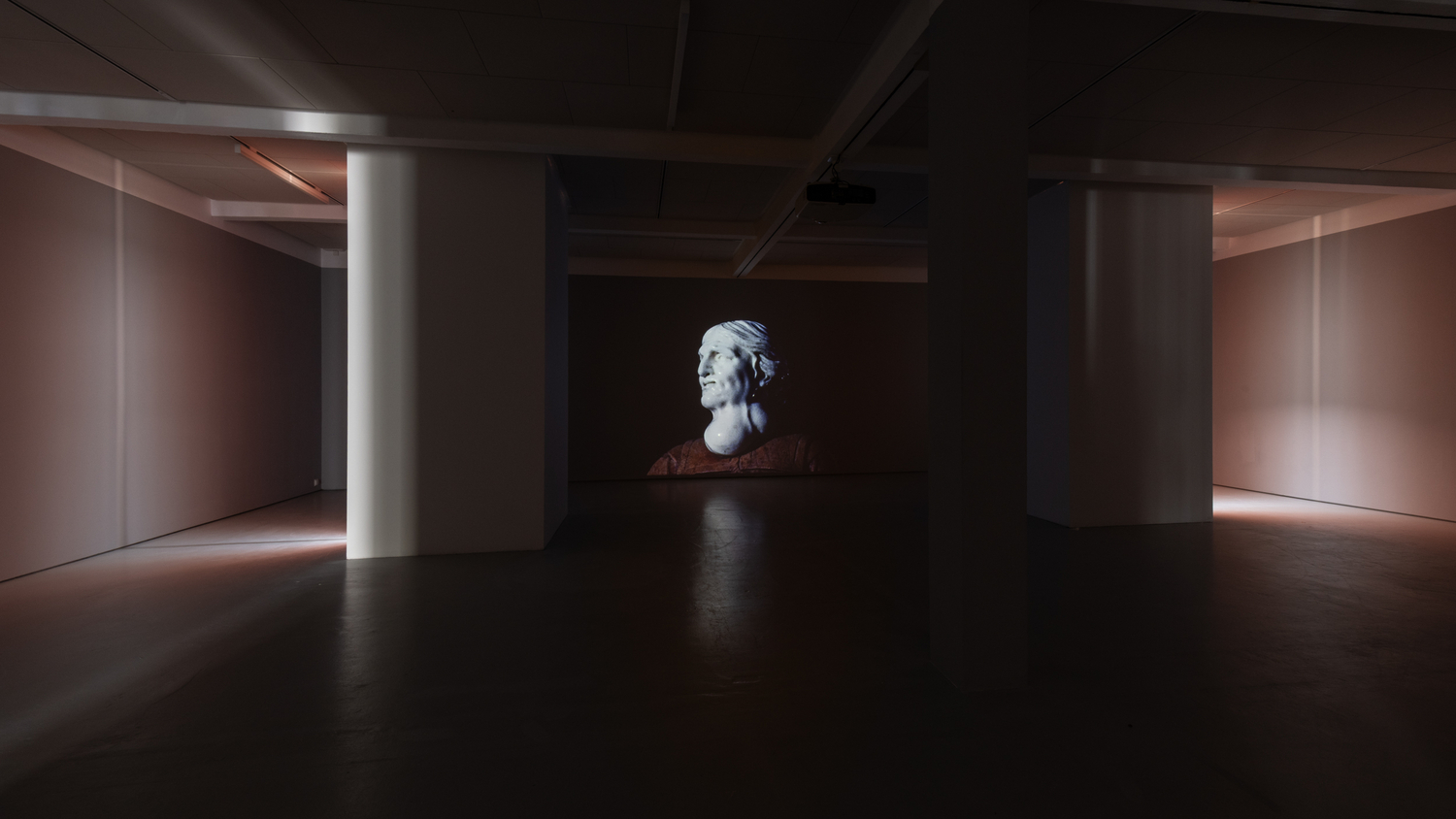
The film New Realism carries these considerations into another temporal layer. It shows the sculpture of a female begging musician by Johann Pichler around 1700. Visible is a woman with a goiter, in worn clothing, holding a hurdy-gurdy close to her body. The figure stands for poverty, illness, and at the same time for enforced presence in public space—a lived reality for many women of the early modern period who had to exist without property or social security. The materiality of the sculpture—wood and ivory—carries an ambivalent historical dimension. While the depiction stages physical hardship and social marginalization, the precious ivory points to supra-regional trade connections and global circulations of materials. In this figure, contradictory meanings amalgamate: local poverty and global decadence converge in a single object.
The hurdy-gurdy shown in the projection is also present as a sculpture in the exhibition space. It produces a uniform, sustained tone that accompanies the projection like a silent film. Its monotonous sound recalls the instrument as one of wandering and migration. It is loud, mobile, playable alone—a tool of survival for people without a fixed place. Sound and image condense into a narrative of movement, uprootedness, and precarious existences that must assert themselves in public space in order to survive.
EVENTS DURING THE EXHIBITION PERIOD
FÜHRUNG
16.04.26, 16:00
KURATOR:INNEN FÜHRUNG
WITH SOFIA OHMER & FLORIAN WALDVOGEL
FÜHRUNG
28.05.26, 16:00
KURATOR:INNEN FÜHRUNG
WITH SOFIA OHMER & FLORIAN WALDVOGEL

